DFS (깊이 우선 탐색)
// 재귀 방식
function dfs(graph, node, visited = new Set()) {
  visited.add(node)
  console.log(node)
  graph[node].forEach((neighbor) => {
    if (!visited.has(neighbor)) dfs(graph, neighbor, visited)
  })
}

// 스택 방식
function dfsStack(graph, startNode) {
  const stack = [startNode]
  const visited = new Set()

  while (stack.length > 0) {
    const node = stack.pop()

    if (!visited.has(node)) {
      console.log(node)
      visited.add(node)
      graph[node]
        .slice()
        .reverse()
        .forEach((neighbor) => {
          if (!visited.has(neighbor)) stack.push(neighbor)
        })
    }
  }
}

const graph = {
  0: [1, 2],
  1: [0, 3, 4],
  2: [0, 5],
  3: [1],
  4: [1],
  5: [2],
}
dfs(graph, 0) // 0, 1, 3, 4, 2, 5Fiber 가 렌더링을 쪼갤 수 있는 이유 — 콜 스택 대신 세 포인터
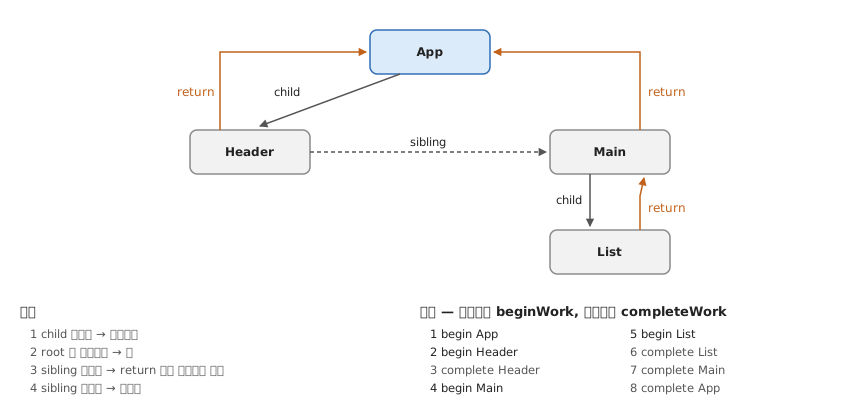
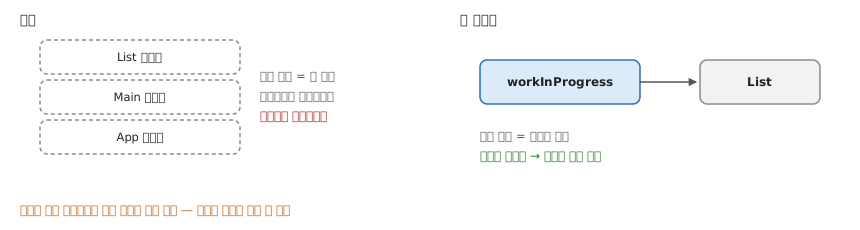
Footnotes
-
“Nothing in Fiber uses the normal JS stack.” / 스택을 다시 쌓는 비용보다 중단이 문제다 — “…we would spend some time unwinding and rebuilding the stack each time. It is not too bad. However, everything along the stack would have to be aware of how to “unwind” when we abort in the middle of the work flow.“ 다만 원문도 Fiber 사정이라고 못박는다 — ”…a few unique design patterns that apply to Fiber, but not necessarily anything else.“ ↩