interface MathFn {
  (a: number, b: number): number
}
const sum: MathFn = (a, b) => a + bFootnotes
const { Parser } = require('acorn')
const JSXParser = Parser.extend(require('acorn-jsx')())

const isReactComponent = Boolean(
  JSON.stringify(
    JSXParser.parse(fileContent, {
      sourceType: 'module',
      ecmaVersion: 'latest',
    })
  ).includes('JSXIdentifier')
)import { match } from 'ts-pattern'
type Format = 'webp' | 'jpg'
type Params = {
id: string
quality: keyof typeof QUALITY_MAP
format: Format
}
const QUALITY_MAP = {
player_background: '0',
video_frames_start: '1',
video_frames_middle: '2',
video_frames_end: '3',
lowest_quality: 'default',
medium_quality: 'mqdefault',
high_quality: 'hqdefault',
standard_quality: 'sddefault',
unscaled_resolution: 'maxresdefault',
}
const BASE_URL = 'https://i.ytimg.com'
const VI = (format: Format) =>
match(format)
.with('jpg', () => 'vi')
.otherwise(() => ['vi', format].join('_'))
export function getThumbnail({ id, quality, format }: Params) {
return [BASE_URL, VI(format), id, QUALITY_MAP[quality]]
.join('/')
.concat(`.${format}`)
}두 개의 오버로딩된 메서드에서 각각의 반환 타입을 명시적으로 추출하기
type Year = {
  year(): number
  year(u: string): string
}

type ReturnTo<T, R> = T extends R ? R : never

type GetYear = ReturnTo<Year['year'], () => number>
type SetYear = ReturnTo<Year['year'], (u: string) => string>템플릿 리터럴 타입을 활용하여 타입 정의하기
import * as React from 'react'

type RenderPropNames = 'Title' | 'Content' | 'Actions'

type RenderProps = {
  [K in RenderPropNames as `render${K}`]: () => React.ReactNode
}

type Props = RenderProps

/**
 * @example
 *
 * ```tsx
 * <DialogComponent
 *   renderTitle={() => <h2>Title</h2>}
 *   renderContent={() => <p>Content</p>}
 *   renderActions={() => (
 *     <div>
 *       <button onClick={handleClose}>Close</button>
 *       <button onClick={handleSubmit}>Submit</button>
 *     </div>
 *   )}
 * />
 * ```
 */
function Dialog({
  renderTitle,
  renderContent,
  renderActions,
}: Props) => {
  return (
    <div data-scope="root">
      <div data-part="content">
        {renderTitle()}
        {renderContent()}
      </div>
      <div data-part="actions">{renderActions()}</div>
    </div>
  )
}type JsonPrimitive = string | number | boolean | null
type JsonObject = { [Key in string]: JsonValue } & {
[Key in string]?: JsonValue | undefined
}
type JsonArray = JsonValue[] | readonly JsonValue[]
type JsonValue = JsonPrimitive | JsonObject | JsonArray예전에 JSON 타입 정의가 필요해서 찾아봤던 내용
JsonObject: 문자열 키와 JsonValue 타입의 값을 가진 JSON 객체를 정의JsonArray: JsonValue 타입의 요소를 포함하는 JSON 배열을 정의JsonPrimitive: 문자열, 숫자, 불린, 또는 null과 같은 유효한 JSON 기본 값을 정의JsonValue: 유효한 JSON 값을 나타내며, JsonPrimitive, JsonObject, 또는 JsonArray로 구성
static create 패턴 - 생성자 대신 정적 메서드로 객체 생성
언제 사용?
- 생성 로직이 복잡하거나 유효성 검사 필요
- 생성 실패 시 null/Result 반환 (생성자는 항상 인스턴스 반환)
- 팩토리 패턴, 싱글톤
class User {
  private constructor(private readonly name: string) {}

  // 유효성 검사 + 실패 시 null 반환
  static create(name: string): User | null {
    if (!name || name.length < 3) return null
    return new User(name)
  }
}

// 팩토리 패턴
class Shape {
  static create(type: 'circle' | 'rect', size: number): Shape {
    return type === 'circle' ? new Circle(size) : new Rectangle(size)
  }
}

// 싱글톤
class Config {
  private static instance: Config
  private constructor() {}
  static create() {
    return Config.instance ??= new Config()
  }
}
단순 초기화만 필요하면 일반 생성자가 더 직관적. 복잡한 생성 로직에만 사용.
Figma의 권한 관리 DSL - JSON 직렬화 가능한 DSL로 정책 표현, TypeScript 기반 평가 엔진 구현.
기존 문제: 불필요한 복잡성, 계층적 권한 비효율, DB 부하, 여러 진실 소스
type ExpressionDef = BinaryExpressionDef | OrExpressionDef | AndExpressionDef

// 바이너리 표현식: [필드, 연산자, 값]
const binaryExpression = ['file.id', '<>', null] satisfies ExpressionDef

// AND/OR 조합
const andExpression = {
  and: [
    ['file.id', '<>', null],
    ['team.permission', '=', 'open'],
  ],
} satisfies ExpressionDefimport type { A } from 'a'React 제네릭 컴포넌트 패턴 - <T extends Record<string, any>>로 row/item 타입 추론
import * as React from 'react'

type Props<TRow> = {
  rows: TRow[]
  renderRow: (row: TRow, index: number) => React.ReactNode
}

const Table = <TRow extends Record<string, any>>({
  rows,
  renderRow,
}: Props<TRow>) => {
  return (
    <table>
      <tbody>{rows.map((row, index) => renderRow(row, index))}</tbody>
    </table>
  )
}

function App() {
  return (
    <Table
      rows={[{ name: 'lee' }]}
      renderRow={(row, index) => (
        <tr key={index}>
          <td>{row.name}</td>
        </tr>
      )}
    />
  )
}
import * as React from 'react'
import { UseComboboxProps, useCombobox } from 'downshift'
function Combobox<T extends Record<string, any>>(
props: UseComboboxProps<T> & {
renderItem: (item: T) => React.ReactNode
}
) {
const combobox = useCombobox(props)
return (
<div>
<input
placeholder="구성원을 검색해주세요."
{...combobox.getInputProps()}
/>
<div {...combobox.getMenuProps()}>
{combobox.isOpen &&
props.items.map((item, index) => (
<div key={item.id} {...combobox.getItemProps({ item, index })}>
{props.renderItem(item)}
</div>
))}
</div>
</div>
)
}
function App() {
return (
<Combobox
items={[{ id: 1, name: 'eunsoo' }]}
itemToString={(item) => `${item?.id}`}
renderItem={(item) => {
return <div>{item.name}</div>
}}
onInputValueChange={({ inputValue }) => {
console.log(inputValue)
}}
/>
)
}import * as React from 'react'
type Prettify<T> = {
[K in keyof T]: T[K]
} & {}
type T = React.ComponentProps<'div'>
type P = Prettify<T>import * as React from 'react'
import { IsEqual } from 'type-plus'
type ModalProps =
| {
variant: 'no-title'
}
| {
variant: 'title'
title: string
}
export const Modal = (props: ModalProps) => {
if (props.variant === 'no-title') {
return <div>No title</div>
} else {
type Test = IsEqual<
typeof props,
{
variant: 'title'
title: string
}
>
return <div>Title: {props.title}</div>
}
}
export const Test = () => {
return (
<div>
<Modal variant="title" title="Hello" />
<Modal variant="no-title" />
{/* @ts-expect-error */}
<Modal />
<Modal
variant="no-title"
// @ts-expect-error
title="Oh dear"
/>
</div>
)
}import * as React from 'react'
export type NonEmptyString<T> = Exclude<T, ''>
type Props<T> = {
src: NonEmptyString<T>
}
function Image<T extends string>({ src }: Props<T>) {
return <img src={src} alt="" />
}
function App() {
return (
<>
{/* @ts-expect-error */}
<Image src="" />
<Image src="ab" />
</>
)
}TypeScript 중첩 객체 타입 부분 수정
interface O {
  actions: { a: string; b: number }
}

// 중첩 속성 Optional로 변경
type MakeNestedOptional<T, K extends keyof T, OK extends keyof T[K]> = Omit<
  T,
  K
> & {
  [P in K]: Omit<T[K], OK> & Partial<Pick<T[K], OK>>
}
type Result = MakeNestedOptional<O, 'actions', 'b'> // { actions: { a: string; b?: number } }

// 중첩 속성 타입 오버라이드
type OverrideNested<T, K extends keyof T, Override> = Omit<T, K> & {
  [P in K]: Omit<T[K], keyof Override> & Override
}
type Result2 = OverrideNested<O, 'actions', { b: boolean }> // { actions: { a: string; b: boolean } }
한두 군데만 쓸 거면 그냥 손으로 타입 작성이 더 명확함. 유틸리티 타입은 반복 사용할 때만 가치.
// 라이브러리 객체 변이 주의
// ❌ info.actions.onDownload = undefined
// ✅ const modifiedInfo = { ...info, actions: { ...info.actions, onDownload: undefined } }tsconfig 핵심: target, lib, module
TypeScript (.ts)
    ↓
lib: 타입 체크 시 뭘 알고 있나? (Promise, Map 등)
    ↓
target: 문법을 얼마나 낮출 건가? (ES2020 → ?. 그대로, ES2019 → 삼항연산자로)
    ↓
module: import/export를 뭘로? (CommonJS → require, ESNext → import)
    ↓
JavaScript (.js)
target vs lib 분리 이유: 문법(syntax)과 API(runtime)는 다름
?.→ target이 변환 (문법)Promise→ 폴리필이 해결 (API)
{
  "target": "ES2019", // 하위호환 (optional chaining 이전)
  "module": "ESNext", // 트리쉐이킹 가능
  "lib": ["ES2020", "DOM"], // 타입은 넉넉하게
  "moduleResolution": "Node"
}
TS 버전 올리면서 target 그대로 두면 Webpack4 같은 구형 번들러에서 파싱 실패할 수 있음.
TypeScript 제네릭 기본값 - <T extends Type = DefaultValue>
type SelectProps<T extends 'single' | 'multiple' = 'multiple'> = {
  mode: T
  value: T extends 'single' ? string : string[]
}

const a: SelectProps = { mode: 'multiple', value: ['a', 'b'] } // 기본값 사용
const b: SelectProps<'single'> = { mode: 'single', value: 'a' } // 명시적 지정

// 여러 매개변수에 각각 기본값
type ApiResponse<
  TData = any,
  TStatus extends 'loading' | 'success' | 'error' = 'loading'
> = {
  data: TStatus extends 'success' ? TData : null
  status: TStatus
}
가장 자주 사용되는 케이스를 기본값으로 설정하면 제네릭을 항상 명시하는 번거로움 줄어듦.
TypeScript Discriminated Union 문서화 딜레마
// 개발: 타입 안전, IDE 자동완성, 명확한 의도
type Button =
  | { type: 'submit'; color: string }
  | { type: 'reset'; text: string }
<!-- 문서화: 조건부 속성 설명 어려움, 테이블 복잡, 예시 다수 필요 -->
| 속성 | 타입 | 조건 |
| ----- | ------------------- | ----------------------- |
| type | 'submit' \| 'reset' | 필수 |
| color | string | type='submit'일 때 필수 |
| text | string | type='reset'일 때 필수 |- 자세한 타입 정의는 TypeScript 정의 파일 참고
- typedoc, api-extractor로 자동 생성
간단한 Redux 스타일 Store 구현
type Reducer<S, A> = (state: S, action: A) => S
type Listener<S> = (state: S) => void

interface Store<S, A> {
  getState: () => S
  subscribe: (listener: Listener<S>) => () => void
  dispatch: (action: A) => A
}

function createStore<S, A>(
  reducer: Reducer<S, A>,
  preloadedState: S
): Store<S, A> {
  let currentState = preloadedState
  let listeners: Listener<S>[] = []

  return {
    getState: () => currentState,
    subscribe: (listener) => {
      listener(currentState)
      listeners.push(listener)
      return () => {
        listeners = listeners.filter((l) => l !== listener)
      }
    },
    dispatch: (action) => {
      currentState = reducer(currentState, action)
      listeners.forEach((l) => l(currentState))
      return action
    },
  }
}Maybe Monad로 null 체크 체이닝
type Maybe<T> = T | null

const Maybe = {
  of: <T>(value: T): Maybe<T> => (value != null ? value : null),
  map: <T, U>(m: Maybe<T>, fn: (v: T) => U): Maybe<U> =>
    m != null ? Maybe.of(fn(m)) : null,
}

// 사용 예: DOM 요소 찾아서 스크롤
Maybe.of(scrollElement.current)
  .map((root) => root.querySelector(`#${id}`))
  .map((target) => target.getClientRects()[0])
  .map((rect) => {
    root.scrollLeft = rect.left
  })
Generator로 early return 패턴도 가능
function* handleScroll(id) {
  const root = scrollElement.current
  if (!root) return
  const target = root.querySelector(`#${id}`)
  if (!target) return
  yield target.getClientRects()[0]?.left ?? 0
}TypeScript Maybe Monad 구현
type Maybe<T> = Just<T> | Nothing

class Just<T> {
  constructor(public value: T) {}
  bind<U>(fn: (value: T) => Maybe<U>): Maybe<U> {
    return fn(this.value)
  }
}

class Nothing {
  bind<U>(fn: (value: any) => Maybe<U>): Maybe<U> {
    return this
  }
}

const nothing = new Nothing()

function safeDivide(x: number, y: number): Maybe<number> {
  return y === 0 ? nothing : new Just(x / y)
}

new Just(10).bind((x) => safeDivide(x, 2)) // Just { value: 5 }
new Just(10).bind((x) => safeDivide(x, 0)) // Nothing {}WeakMap의 키를 “입력 배열의 참조 자체”로 쓰면 캐시 무효화 로직이 0줄이 된다 — 무효화를 참조 동등성에 위임.
같은 배열을 이름 같은 키로 반복 조회해서 O(n) 스캔이 계속 도는데, 그 배열이 언제 바뀌는지 추적하기는 싫을 때 쓴다.
// 키가 weak — items 가 어디서도 안 잡히면 entry 도 GC. 일반 Map 이면 영구히 붙들려 누수
const indexCache = new WeakMap<Item[], Map<string, string>>()

// name → id 역인덱스를 1회 빌드 (O(n))
const buildIndex = (items: Item[]) =>
  new Map(items.map((it) => [it.name, it.id]))

function lookup(items: Item[], name: string): string | null {
  // 키는 내용이 아니라 참조(===)로 비교된다. 불변 업데이트면 "데이터가 바뀜" = "참조가 바뀜"이라
  // 이 조회가 곧 무효화 검사다 — 그래서 delete·clear 가 어디에도 없다
  let index = indexCache.get(items)
  if (!index) {
    // 새 참조(refetch 등) → 자동 miss. 옛 index 는 옛 items 와 함께 GC
    index = buildIndex(items)
    indexCache.set(items, index)
  }
  return index.get(name) ?? null // 여기부터 O(1) — 호출마다 돌던 find 의 O(n) 스캔이 사라진 자리
}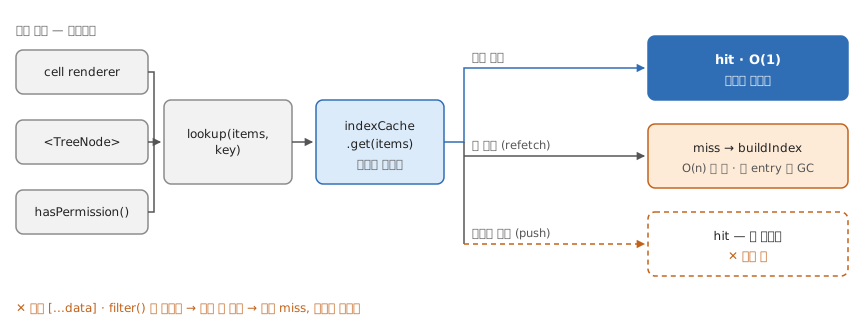
같은 배열 참조로 두 번 불러 buildIndex가 한 번만 돌면 된 것이다.
단 호출 측 items 참조가 stable해야 작동한다. 매번 [...data]·data.filter()로 새 배열을 넘기면 항상 miss라 무의미하다. (TanStack Query의 data/select 결과는 참조 안정성을 보장하므로 그대로 넘기면 OK) 반대로 push·splice 로 제자리에서 바꾸면 참조가 같아 옛 인덱스가 그대로 나온다 — 이쪽은 느린 게 아니라 틀린 값이다.
참고
dayjs 날짜 표기 카탈로그
1. 문제 — 날짜 표기를 한곳으로 모으고 싶다
화면마다 dayjs().format('…')이 흩어져 같은 날짜가 다르게 찍힌다. 날짜 표기를 받는 인자를 타입으로 닫아 허용된 표기만 쓰게 하고 싶다.
2. 첫 발상 — 매핑 객체
표기 이름과 포맷 문자열을 짝짓는 객체({ DATE: 'YYYY-MM-DD', … })부터 떠올랐다. i18n 습관이다 — i18n은 이름표(인사)와 내용(Hello)이 달라서 짝지어 주는 객체가 필수였다.
그런데 dayjs는 포맷 문자열이 곧 키이자 값이다.1 이름을 따로 붙이면 같은 정보를 두 번 들고 있게 된다. 매핑 객체는 필요 없다.
3. 해결 — 배열 하나에서 파생
허용 표기를 as const 배열 하나에 두고, 타입과 진입점을 거기서 파생한다.
import dayjs from 'dayjs'

export const DATE_FORMATS = [
  'YYYY-MM-DD',
  'YYYY-MM-DDTHH:mm:ss',
  'HH:mm',
  'YYYY년 M월',
  'YY년 M월 D일',
  'YYYY.MM.DD',
  'YY.MM.DD',
  'YYYY.MM.DD(ddd)',
  'YYYY.MM.DD HH:mm',
] as const

export type DateFormat = (typeof DATE_FORMATS)[number]

export const formatDate = (
  date: dayjs.ConfigType,
  format: DateFormat,
): string => dayjs(date).format(format)DATE_FORMATS— 허용 표기의 단일 출처DateFormat— 배열에서 파생된 닫힌 union. 따로 손댈 곳이 없다formatDate— 유일한 진입점
4. 새 표기가 필요해지면
- 여러 곳에서 통일이 필요한 표기인지 먼저 본다. 일회성(
'M.D'등)이면 rawdayjs().format()으로 둔다 — 이 기준이 없으면 배열이 잡동사니 enum이 된다. DATE_FORMATS에 추가한다. 그게 전부다.ddd가 들어 있으면 진입점에dayjs.locale('ko')가 있는지 본다.2
5. 남은 구멍
- raw 우회는 타입이 못 막는다. 카탈로그에 있는 표기를
formatDate없이 raw로 다시 써도 오류가 없다. no-raw-date-format(no-restricted-syntax)이 필요한데 아직 안 썼다. 그 규칙 전까지 단일 출처는 관행일 뿐이다. ddd는 조용히 샌다.dayjs.locale('ko')없이 쓰면Mon·Tue처럼 영어로 나오고, 예외도 타입 오류도 없다.YYYY.MM.DD(ddd)만 런타임 전제를 가진 항목이다.